








87%
faster time to root cause, 2x accuracy vs. the alternative they evaluated
“We pull fewer engineers into war rooms, on-call is materially better.”
Shahrooz AnsariSr. Director of Engineering


Shaping the future of software engineering
Handing on-call and incidents to agents takes more than models and MCP connectors. The rest is architecture.
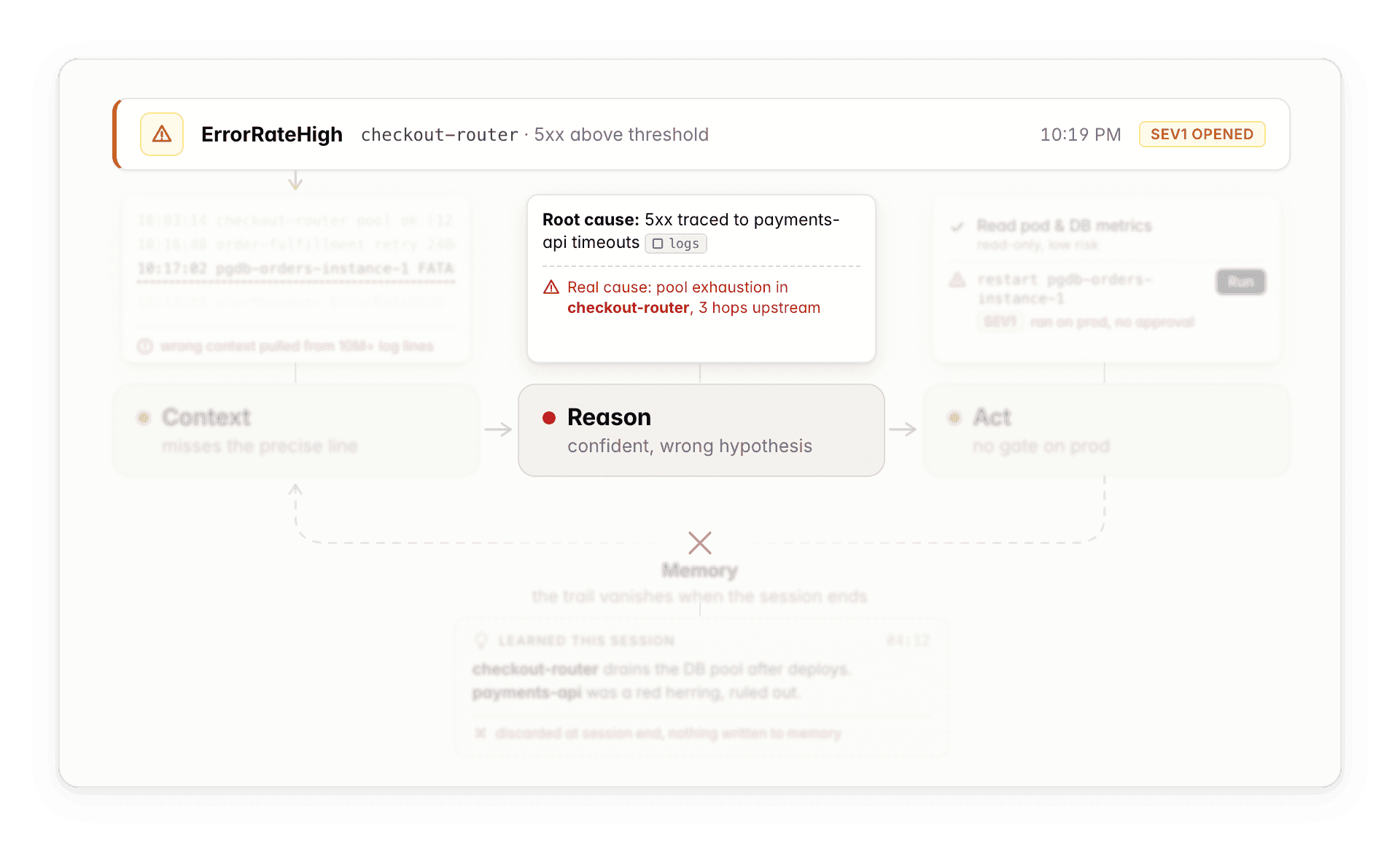
4 common ways DIY builds break
Two kinds of cost, both to build it and to keep it running.
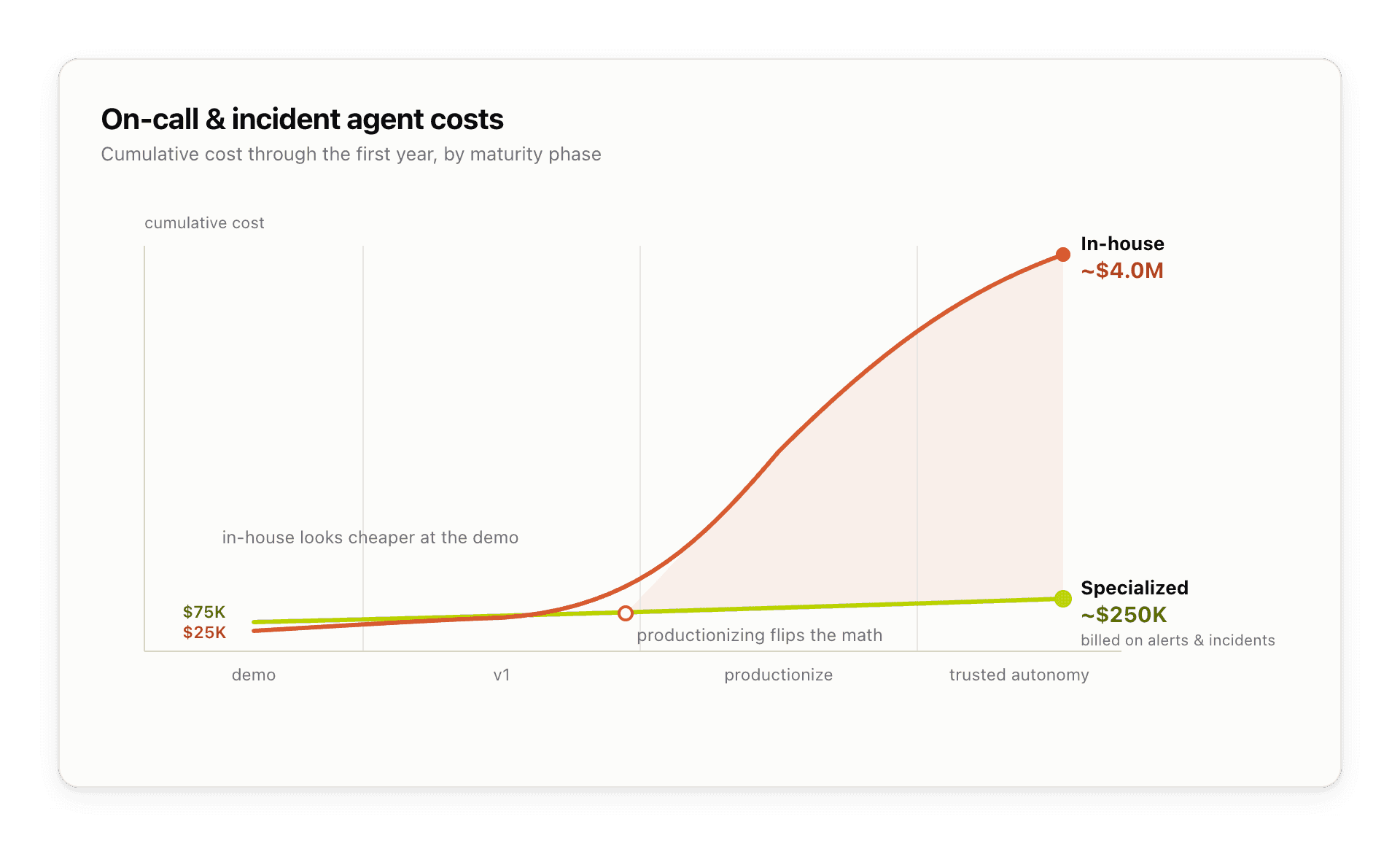
Building this takes a rare mix of AI and systems engineers, roughly 10-15 of them over about two years to reach parity. Then it never really ends: every model release reworks the orchestration, evals need an owner, and someone stays on-call for the AI itself. A standing team, not a one-time build.
A frontier model on every task at production volume, with agents querying massive logs. Model and token costs climb with every investigation, and today's subsidized pricing turns into real invoices as volume grows.
Per-investigation cost stays flat from ten a week to thousands, because the architecture routes each step to the right model and retrieves only what the hypothesis needs. Put in your own numbers with the TCO calculator.
“We pull fewer engineers into war rooms, on-call is materially better.”

“I don't need more numbers or more data. What I need is a root cause.”

“It surfaced accurate root causes 72% faster than our teams, integrating cleanly into our existing stack.”

Put in your own numbers and see what it would cost to build and run this in-house.

The full build-vs-buy decision, piece by piece.
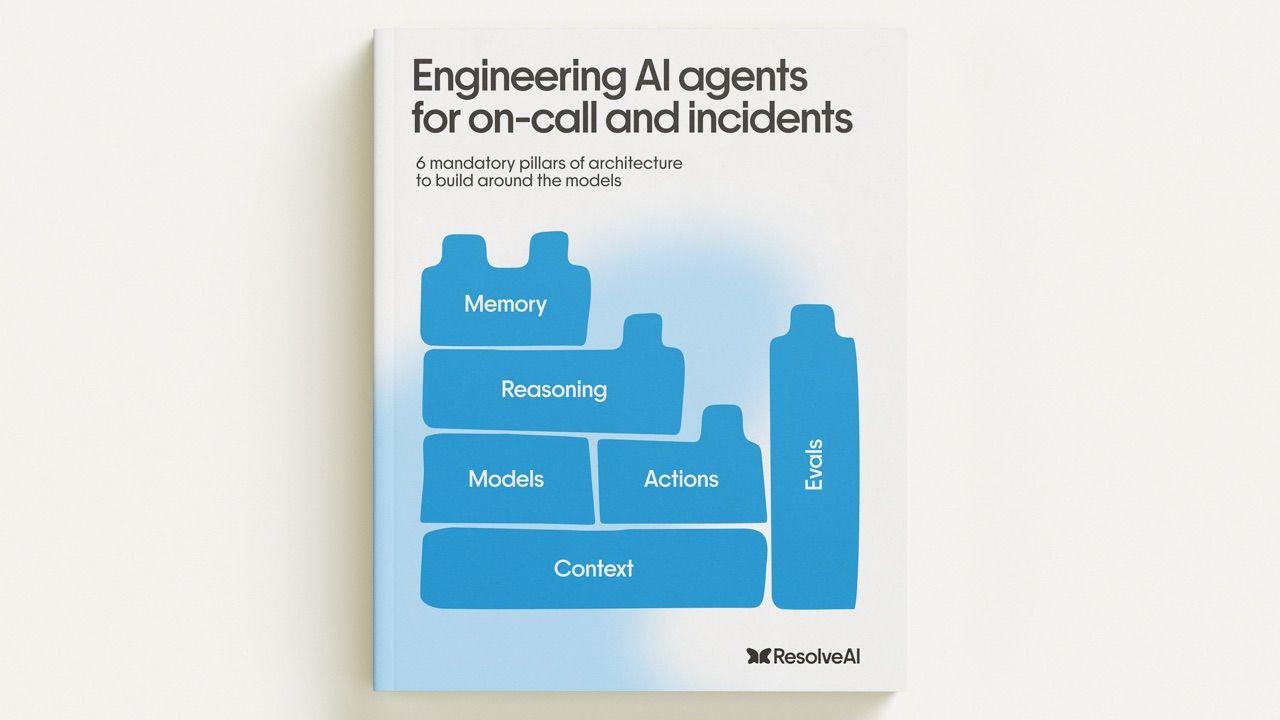
The six pillars an agentic harness needs to run production investigations.
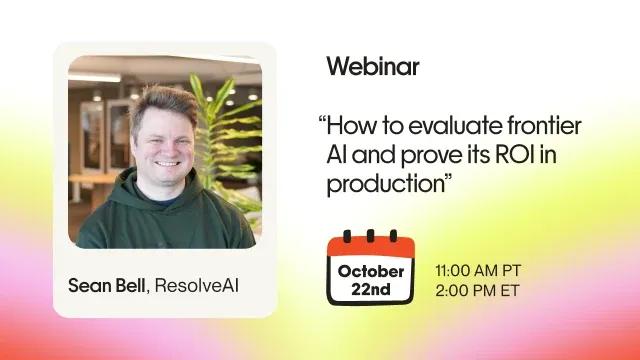
Resolve AI's Dave Lawson and Ed Li walk through the build-vs-buy decision, the five pieces you need, and the cost of running each stage in-house. On demand.
We'll talk through what you're building, what it takes to reach real root cause at your scale, and where Resolve AI fits.
Book a demo