





Loading the page…


Shaping the future of software engineering
Support teams are drowning in tickets, and support automation platforms were supposed to be the life raft. Instead, they've become another system to manage. The promise was simple: automate the routine work so humans can focus on complex problems. The reality? These platforms often create as many bottlenecks as they eliminate, shuffling tickets between queues while the underlying context that drives resolution remains scattered across dozens of tools and teams.
The fundamental issue isn't that support automation platforms don't work — it's that they're solving the wrong problem. They optimize for routing speed when the real constraint is context assembly. When a customer reports that "payments are failing intermittently," the path to resolution doesn't start with faster ticket assignment. It starts with understanding whether this is an application bug, a database performance issue, an infrastructure problem, or a third-party service degradation.
Traditional support automation platforms excel at what they were designed for: moving tickets through predefined workflows. They can automatically categorize a password reset request, escalate based on customer tier, or route billing questions to the finance team. These are valuable capabilities when the problem and solution path are well-understood.
But production incidents don't follow predefined workflows. A "slow page load" complaint might trace to:
Each of these requires different expertise, different tools, and different investigation approaches. Rule-based automation can't navigate this complexity because it can't reason about the relationships between symptoms and causes across domain boundaries.
The result is a new kind of inefficiency: tickets get routed quickly to the wrong teams, creating handoff delays and information loss. Engineers spend time on problems outside their expertise while the actual root cause remains unaddressed. The automation optimizes the wrong metric — time to assignment rather than time to resolution.
Support teams operate in an environment where critical context is scattered across incompatible systems. Application logs live in Datadog, infrastructure metrics in CloudWatch, code changes in GitHub, customer data in Salesforce, and tribal knowledge in Slack threads and runbooks that go stale.
When an incident occurs, assembling the complete picture requires expertise in multiple domains and fluency with dozens of tools. A single investigation might need:
This context fragmentation creates three specific problems that traditional support automation platforms can't address:
Query language expertise becomes a bottleneck. Each system has its own query syntax. Finding relevant logs in Datadog requires different skills than analyzing metrics in Prometheus or investigating Kubernetes events. Support engineers often know enough to identify which system might contain answers, but not enough to extract those answers efficiently.
Cross-system correlation requires human interpretation. The relationship between a spike in database connection errors and customer payment failures isn't automatically discoverable. It requires understanding how data flows through the system, which services depend on each other, and how failures propagate. This knowledge is rarely documented and constantly evolving.
Investigation paths are non-linear and hypothesis-driven. Effective troubleshooting involves forming theories, testing them against available data, and refining based on results. This process can't be reduced to if-then rules because each piece of evidence changes the probability of different root causes.
Rule-based support automation platforms work well within their designed scope but break down when incidents require reasoning across multiple domains. Consider a real scenario: customers report intermittent checkout failures during peak traffic.
A traditional automation platform might route this to the payments team based on keywords. But the actual root cause could be:
Each hypothesis requires different investigation approaches and different expertise. The payments team might spend hours analyzing transaction logs while the real issue is infrastructure capacity. By the time the ticket gets routed to the right team, customer impact has compounded and valuable debugging context has been lost.
The fundamental limitation is that rule-based systems can't maintain and update a working theory as new evidence emerges. They can't reason about the relationships between symptoms observed in different systems. They can't adapt their investigation strategy based on what they discover.
AI triage represents a different approach to support automation. Instead of routing tickets faster through predefined paths, it assembles context from across the production environment to form initial working theories about root causes.
When a customer reports an issue, AI triage doesn't just categorize the problem — it immediately begins investigating across relevant systems. It queries application logs, checks infrastructure metrics, reviews recent deployments, and correlates the timeline with other reported issues. This investigation happens in parallel with human response, not as a prerequisite to it.
The key insight is that AI triage combines the speed of automation with the reasoning capability that rule-based systems lack. It can:
This approach transforms the support automation platform from a routing system into an intelligence layer that augments human expertise rather than replacing it.
Early pilots of AI triage show measurable improvements in support efficiency, with response times improving by 30% through better context assembly rather than faster routing.
The improvement comes from eliminating the investigation overhead that traditionally consumes the first portion of any incident response. Instead of engineers spending 15-20 minutes gathering basic context about what systems are involved, what's changed recently, and what the symptoms suggest, they receive this analysis immediately.
More importantly, the quality of initial context reduces false starts and wrong-path investigations. When engineers understand from the beginning that a "payment issue" is actually correlated with database performance problems, they can focus their expertise on the right domain from the start.
The pilot results also revealed that AI triage's value increases with system complexity. Organizations with simpler architectures saw modest improvements, while those with microservices, multi-cloud deployments, and complex service dependencies saw the most significant gains. This makes sense: the more fragmented the context, the greater the value of automated context assembly.
Implementing AI triage requires a different approach than traditional support automation platforms. Instead of defining routing rules, teams must focus on data connectivity and investigation workflows.
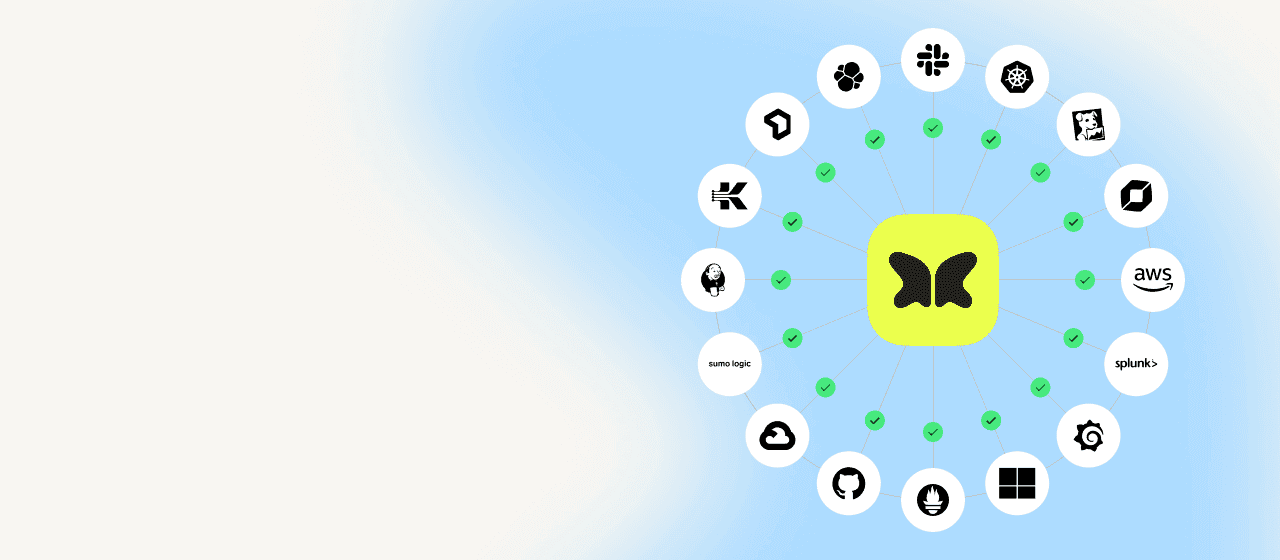
Phase 1: Connect production context. AI triage requires access to the same systems human engineers use for investigation — observability platforms, infrastructure monitoring, deployment systems, and knowledge repositories. The goal isn't comprehensive data ingestion but strategic connectivity to high-signal sources.
Phase 2: Define investigation patterns. Rather than routing rules, teams define investigation patterns that mirror how experienced engineers approach different types of problems. These patterns guide how AI triage forms and tests hypotheses across different domains.
Phase 3: Establish feedback loops. AI triage improves through interaction with human engineers who can validate or correct its reasoning. When an engineer determines that the AI's initial theory was wrong, that correction becomes training data for future similar incidents.
Phase 4: Measure context quality, not just speed. Traditional support metrics focus on time to assignment and resolution. AI triage requires additional metrics around context quality: How often do initial theories prove correct? How much investigation time is saved? How frequently do tickets require re-routing?
The transition from reactive automation to proactive intelligence happens gradually. AI triage can operate alongside existing support automation platforms, providing enhanced context for human engineers while traditional routing rules continue to function.
Organizations considering AI triage should evaluate it against their current support automation platform capabilities, not as a complete replacement but as an intelligence layer that enhances existing workflows.
Start by identifying the types of incidents where context assembly is the primary bottleneck. These are typically:
Pilot AI triage on these specific incident types rather than attempting to replace entire support workflows. Measure not just resolution time but context quality — how often does the AI's initial analysis point engineers in the right direction?
The goal isn't to eliminate human expertise but to ensure that expertise is applied to the right problems with the right context from the beginning. Support automation platforms will continue to handle routine routing and workflow management. AI triage handles the harder problem of understanding what's actually happening in production systems.
If your team is spending more time routing tickets than resolving them, it's time to move beyond traditional support automation platforms. Resolve AI's intelligent triage system assembles production context across your entire stack, providing engineers with working theories and relevant evidence from the moment an incident is reported.
See how AI triage can reduce your response times and improve resolution quality. Schedule a demo to explore how intelligent context assembly transforms support operations.
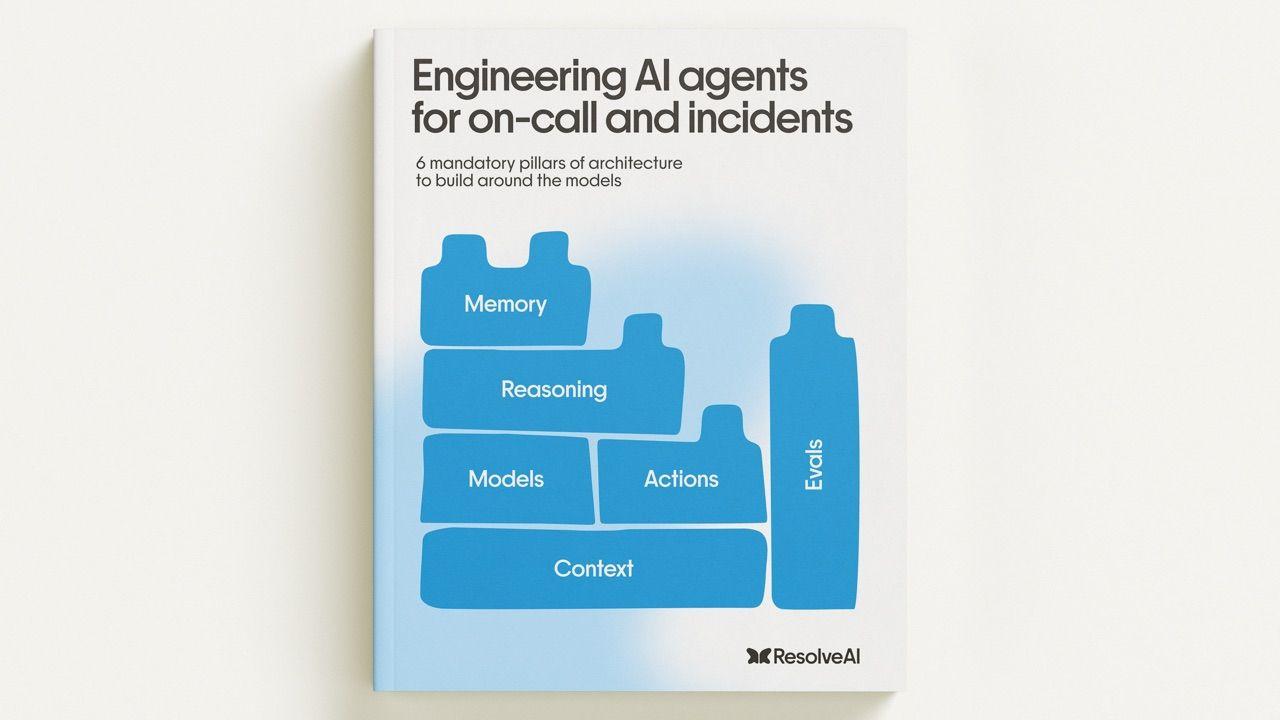
AI for prod ebook
Learn how top engineering teams use AI to run production.
See the agents that run and fix software in action
Join our engineering leads for "Behind the Build", a webinar series deep-dive into how we built agents that run software.