




Back
7 min read
Top 5 AI SRE product comparisions
The New Category: AI for Production Systems
The AI tooling landscape for engineering teams has exploded. Coding assistants help you write functions. Observability platforms show you dashboards. AI SRE tools promise to handle incidents. But when a production issue hits—when your API latency spikes, your database connection pool maxes out, and customer support tickets start flooding in—these point solutions fall short.
The problem isn't that these tools are bad. It's that production doesn't respect the boundaries they've drawn. An incident that starts with a code deployment might surface in infrastructure metrics, require database expertise to diagnose, and need coordination across three teams to resolve. Your senior engineers handle this by connecting dots across domains. Your tools don't.
This is why we built Resolve AI as something fundamentally different: AI for Production Systems. Not better observability. Not smarter incident response. A new category that works across code, infrastructure, and telemetry the way your senior engineers do—for incidents, optimization, and development.
Let's examine how Resolve AI compares to the existing categories of tools that claim to solve production problems.
Resolve AI vs. AI SRE Tools
What they do: AI SRE tools focus on incident response. They analyze alerts, attempt to identify patterns, and sometimes suggest remediation steps based on historical data.
The limitation: Production systems are broader than just reliability. These tools are built for one workflow—incident response—and struggle outside that scope. When you need to optimize infrastructure costs, understand how a code change will impact production, or help a new engineer understand your architecture, AI SRE tools have nothing to offer.
How Resolve AI is different: Resolve AI handles incidents as one use case among many. The same system that investigates a production outage can analyze why your AWS bill increased 40% last month, provide architectural guidance for extending an existing service, or help an application engineer understand database query patterns without waiting for DBA support.
This breadth matters because working with production isn't just about firefighting. Engineers spend time debugging customer issues that aren't incidents. They optimize costs. They build features on existing systems. They need to understand production context during development. Resolve AI provides cross-domain expertise for all of it.
Key differentiator: Production systems are broader than just reliability. You need AI that works across the entire production lifecycle, not just when things break.
Resolve AI vs. Observability Tools
What they do: Observability platforms (Datadog, New Relic, Dynatrace) collect telemetry—logs, metrics, traces—and display it through dashboards and query interfaces. Some have added AI features for anomaly detection or log summarization.
The limitation: They show you data. You still need to interpret it, correlate across tools, and figure out what to do. When you see a spike in error rates, your observability tool can't tell you whether it's caused by a recent deployment, an infrastructure change, or an upstream dependency failure. It can't check your Kubernetes cluster, review recent commits, or query your database—because it only sees telemetry, not the systems that generate it.
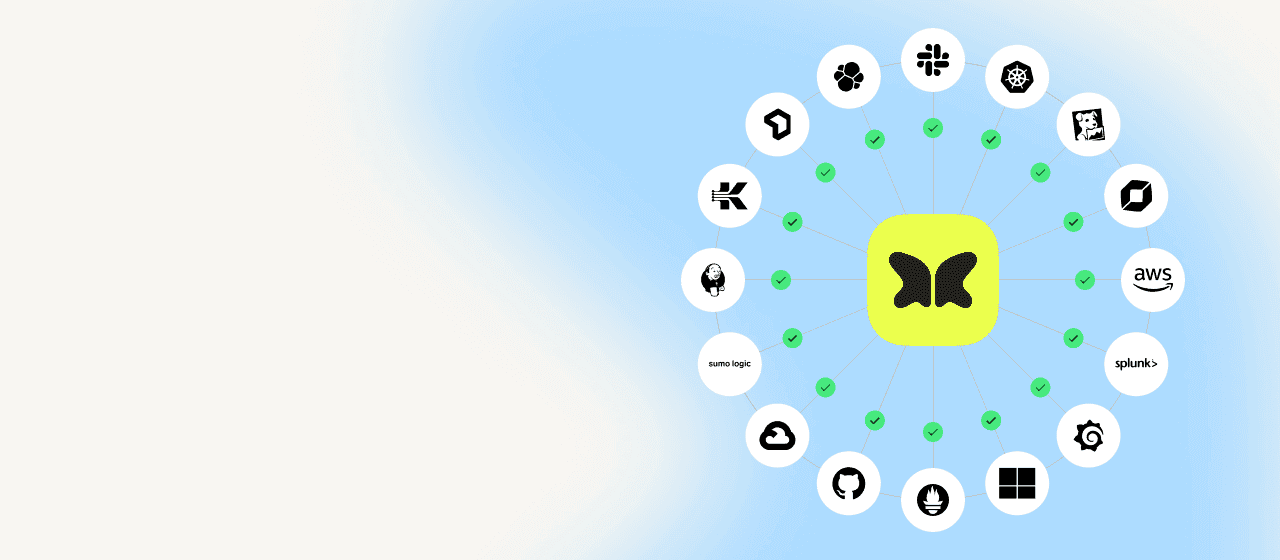
How Resolve AI is different: Resolve AI operates your tools, not just displays their data. When investigating an issue, it queries logs in Datadog, checks recent deployments in GitHub, examines infrastructure state in AWS, and analyzes database performance—all while understanding how these systems relate to each other.
More importantly, Resolve AI takes action. It doesn't just show you a graph with an anomaly highlighted. It formulates hypotheses about what caused the anomaly, gathers evidence by operating your production tools, and provides specific recommendations grounded in your actual system architecture. It's the difference between a dashboard that requires human interpretation and an investigation that produces answers.
Key differentiator: We operate tools and take action, not just display dashboards. You get recommendations with evidence, not just data that requires interpretation.
Resolve AI vs. Coding Assistants
What they do: Coding assistants (Cursor, GitHub Copilot, Claude Code) help engineers write code. They're excellent at generating functions, suggesting completions, and explaining code snippets.
The limitation: They see code in isolation. They don't know what's running in production, how your infrastructure is configured, or how your services interact. When you need to build a feature on an existing system, they can suggest code—but that code won't account for your current database schema, your service's actual dependencies, or the architectural patterns your team has established.
How Resolve AI is different: Resolve AI understands production context. It knows your current architecture, how services communicate, what infrastructure supports each component, and how recent changes have impacted system behavior. When you're building on existing systems, it provides architectural guidance based on what's actually running, not just what's theoretically possible.
This distinction becomes critical for brownfield development—the reality of most engineering work. You're not building greenfield services. You're extending systems that have years of accumulated complexity. Resolve AI helps you work with that complexity by understanding it, while coding assistants treat your production architecture as a black box.
Key differentiator: "Build on existing systems" requires understanding current production architecture. We provide that context; coding assistants don't.
Resolve AI vs. AIOps Platforms
What they do: AIOps platforms promise to use AI for IT operations—correlating alerts, detecting anomalies, and automating routine tasks. They typically sit on top of existing monitoring tools and attempt to reduce alert noise.
The limitation: Most AIOps platforms focus on pattern matching and correlation at the alert level. They can tell you that five alerts fired at the same time, but they struggle to investigate root cause across domains. They're designed for alert management, not deep investigation that spans code, infrastructure, and telemetry.
How Resolve AI is different: Resolve AI doesn't just correlate alerts—it investigates them. When multiple alerts fire, it doesn't group them by timing. It builds hypotheses about causal relationships, gathers evidence by operating your production tools, and determines which alert represents the root cause versus which are symptoms.
The investigation happens through multi-agent orchestration. Specialized agents with expertise in different domains (application, infrastructure, database, network) work together, the way your engineering team would if everyone were available and already had context. This isn't pattern matching. It's systematic investigation that mirrors how experienced engineers think.
Key differentiator: Deep investigation with specialized agents, not single-shot LLM responses. We pursue multiple hypotheses across domains simultaneously and converge on root cause through evidence.
Resolve AI vs. Runbook Automation Tools
What they do: Runbook automation tools execute predefined workflows in response to specific triggers. They're useful for automating repetitive tasks where the steps are well-understood and don't change.
The limitation: They only work for known problems with documented solutions. When you encounter a novel issue—a new failure mode, an unexpected interaction between components, or a problem that requires diagnosis before remediation—runbook automation has nothing to offer. You're back to manual investigation.
How Resolve AI is different: Resolve AI handles both known and unknown problems. For known issues, it can execute remediation automatically. But its real value emerges with novel problems that require investigation.
Because Resolve AI builds a live model of your production systems and learns from every interaction, it develops the pattern recognition that takes engineers years to build. When an engineer corrects its reasoning or an investigation leads to root cause, that becomes institutional knowledge. The system gets smarter about your specific environment over time—not through reading documentation, but through participating in real investigations.
Key differentiator: Builds institutional knowledge with every interaction. Gets smarter about your specific systems through learning from investigations, not just executing predefined workflows.
What This Means for Engineering Teams
The category matters because the problem is structural. Production is fragmented across tools, expertise is siloed across teams, and critical knowledge lives in senior engineers' heads. Point solutions optimize for their specific domain, but they can't solve cross-domain problems.
Resolve AI gives every engineer the cross-domain expertise to work across code, infrastructure, and telemetry. Application engineers can debug production issues without waiting for platform support. Platform engineers can scale their expertise instead of answering the same questions repeatedly. Engineering leaders can distribute tribal knowledge from senior engineers across their entire team.
This isn't about replacing tools you already use. Resolve AI works with your systems as-is—no rip-and-replace required. It operates your existing observability tools, connects to your code repositories, and understands your infrastructure. The value comes from connecting these systems and providing expertise that spans all of them.
See It In Action
The best way to understand how Resolve AI differs from these categories is to see it work with your production systems. We can show you how it investigates an incident in your environment, provides architectural guidance for your specific services, or helps optimize costs based on your actual usage patterns.
Book a demo to see Resolve AI in action with your production systems—or watch a recorded demo to see how cross-domain investigation works in practice.
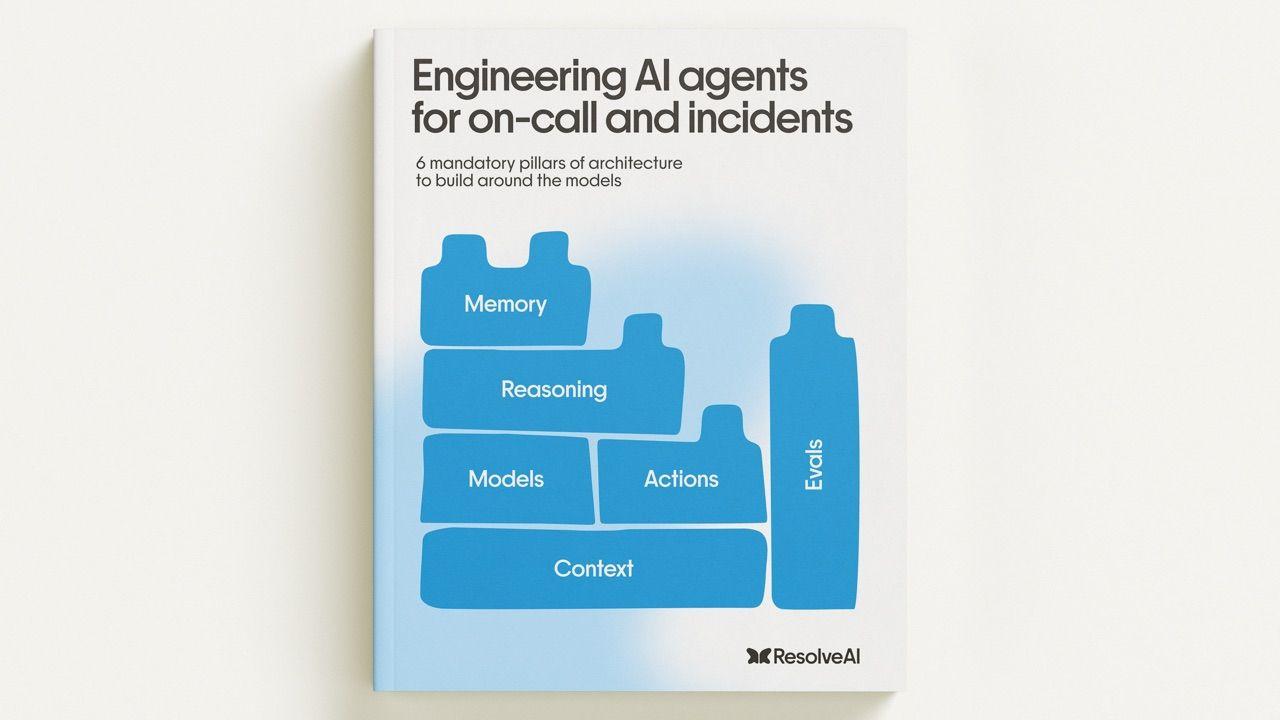
AI for prod ebook
Learn how top engineering teams use AI to run production.
See the agents that run and fix software in action
Join our engineering leads for "Behind the Build", a webinar series deep-dive into how we built agents that run software.