




Loading the page…


Shaping the future of software engineering
When engineering teams search for "AI SRE tools" or "AI incident management," they're usually looking for something much bigger than what those terms suggest. They're looking for AI that can actually work with production systems—not just respond to incidents, but investigate root causes, optimize infrastructure costs, and help build on existing architectures.
The market has been calling this different things: AI SRE, AIOps, intelligent observability, AI-powered incident response. But these labels miss the point. They're all point solutions focused on narrow workflows. What engineering teams actually need is a new category entirely: AI for Production Systems.
Search for AI incident management solutions and you'll find tools like PagerDuty's AI capabilities, BigPanda, Moogsoft, or xMatters. These platforms automate alert routing, reduce noise, and trigger runbooks based on patterns. They're valuable for coordination—getting the right people in the room faster.
But coordination was never the bottleneck.
The hard part isn't assembling your incident response team. It's the investigation itself: understanding what's actually wrong, why it's happening, and what will fix it. That requires connecting dots across code, infrastructure, and telemetry—domains that traditional AI SRE tools don't span.
AI SRE tools focus on incident response because that's where the obvious pain lives. But production systems are much broader than reliability alone. Engineers spend their time on incidents, yes—but also on cost optimization, debugging customer issues, deploying safely, and building features on existing systems. All of these require the same cross-domain expertise.
The production AI landscape today consists of three categories, each with fundamental limitations:
Tools like Datadog, New Relic, Dynatrace, and Splunk have added AI capabilities—anomaly detection, log analysis, predictive alerting. These features make their own data more accessible. But they only see what their instrumentation captures. They show you metrics and logs. They don't investigate across tools, connect infrastructure changes to application behavior, or understand how your code actually runs.
The limitation isn't the quality of the AI—it's the scope of the context. Production answers require correlating data across multiple systems that no single observability platform sees.
GitHub Copilot, Cursor, and Claude Code have transformed how engineers write code. They're exceptional at code generation, refactoring, and explaining codebases. But they operate in a vacuum—no connection to what's actually running in production, how your infrastructure is configured, or what your telemetry is showing.
When you need to build on existing systems, understand why a service is failing, or investigate a cost spike, coding assistants can't help. They see code, not production.
Beyond the established players, newer tools like Rootly, FireHydrant with AI, or incident.io are adding AI to incident workflows. These tools are purpose-built for incident management—they're excellent at what they do within that scope.
But production work extends far beyond incidents. Cost optimization requires analyzing actual usage patterns across infrastructure. Production debugging needs to trace through service dependencies and data flows. Building on existing systems demands understanding current architecture and deployment patterns.
AI SRE is one use case. Production systems are the category.
The category we're defining—AI for Production Systems—requires three capabilities that traditional tools don't provide:
Production systems aren't just code, or just infrastructure, or just telemetry. They're the interaction of all three. Understanding why a 502 error occurred requires seeing how code changes propagated through infrastructure under specific traffic patterns, captured in logs and metrics.
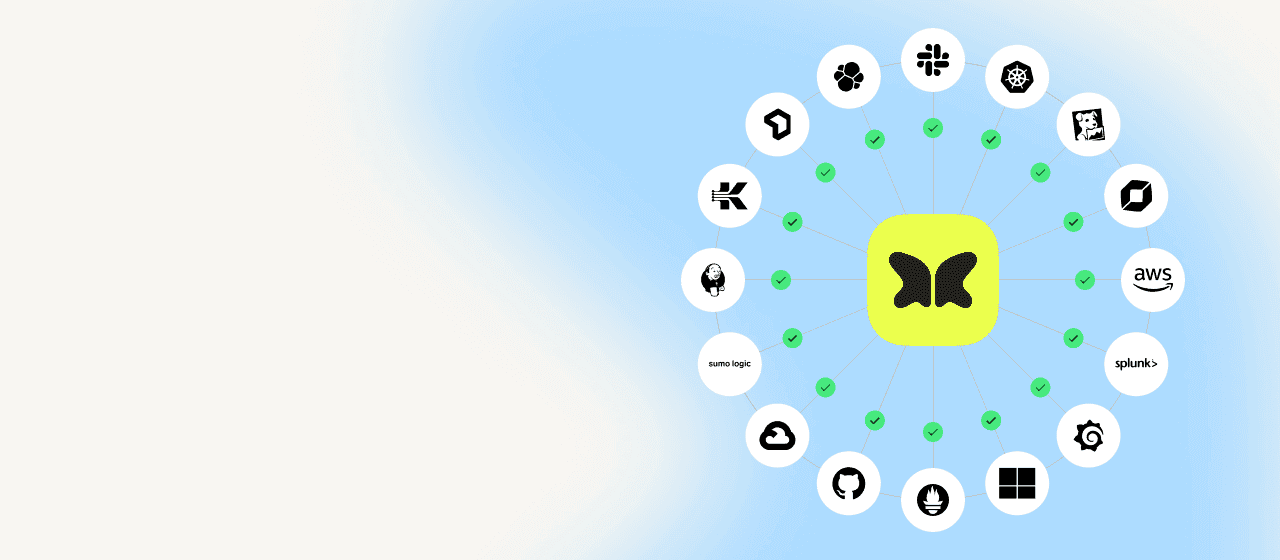
AI for Production Systems connects to your entire production environment as-is. It understands service dependencies, infrastructure relationships, deployment patterns, and how changes flow through your systems. It doesn't require ripping out your existing stack—it works with GitHub, AWS, Kubernetes, Datadog, PagerDuty, and 100+ other tools your team already uses.
This isn't observability data plus code access. It's understanding the relationships between components—how they interact, depend on each other, and fail together.
When a senior engineer investigates a production issue, they don't stay within a single domain. They check application logs, examine infrastructure metrics, review recent deployments, query databases, and trace request flows. They pursue multiple hypotheses in parallel—application bug, infrastructure misconfiguration, database contention, network issue—adjusting their investigation based on what they find.
AI for Production Systems investigates the same way. It orchestrates multiple specialized agents that bring expertise across domains—code analysis, infrastructure operations, log investigation, metrics analysis, trace correlation. These agents collaborate to form a complete picture, the way your entire engineering team would if they were all available.
This is fundamentally different from single-shot LLM responses or AI features within individual tools. It's hypothesis-driven investigation with evidence gathering across your entire production stack.
The most valuable production knowledge isn't written down. It's pattern recognition that senior engineers carry—which investigation paths work, what symptoms indicate which root causes, how past incidents were resolved.
AI for Production Systems captures this tribal knowledge by sitting in the execution path. It doesn't just read historical data—it observes investigations as they unfold, seeing what engineers check, how they adjust their approach, and what ultimately resolves issues. Every incident becomes searchable precedent. Every investigation makes the system smarter about your specific environment.
This creates a learning system that distributes expertise across your team. Junior engineers get senior-level guidance. Senior engineers spend less time on routine investigations and more time on architectural work.
AI for Production Systems enables capabilities that span the entire production lifecycle:
Resolve incidents: Autonomously investigate alerts, identify root causes with evidence, and provide fixes to restore service. Reduce MTTR from hours to minutes while improving accuracy in root cause identification.
Optimize costs: Analyze actual usage patterns across infrastructure and observability to identify savings opportunities. Right-size resources, reduce observability ingestion costs, and improve performance—typically delivering ROI within the first quarter.
Build on existing systems: Provide architectural recommendations and implementation guidance based on your actual production context. Unlike coding assistants that generate code in isolation, this understands your current architecture, deployment patterns, and constraints.
Debug production: Investigate why specific user flows or features aren't working by tracing through service dependencies, examining data flows, and correlating telemetry across systems.
Deploy with confidence: Analyze the potential impact of infrastructure changes before implementation, reducing the risk of deployments and enabling faster shipping.
These aren't separate tools. They're different applications of the same core capability: AI that works across your entire production environment with senior-level expertise.
AI has collapsed the cost of creating code. Features are cheap. What's scarce is trust—software that works when customers need it, that doesn't break, that earns confidence through reliability over time.
Trust follows reliability. Reliability is production.
This is why production is the biggest leverage in software engineering. Not because it's where engineers spend their time—though they spend 70% of it there—but because it's what customers actually experience. The bank is software. The airline is software. Customer experience is software experience.
As AI makes code generation faster, the bottleneck shifts to production. How quickly can you investigate issues? How confidently can you deploy? How efficiently do your systems run? These questions determine engineering velocity, system reliability, and infrastructure costs—the outcomes that actually matter to businesses.
Leading engineering teams at Coinbase, DoorDash, Salesforce, and others are already using AI for Production Systems to transform how they work. They're reducing MTTR, cutting infrastructure costs, and distributing expertise that was previously bottlenecked on senior engineers.
This is just the beginning. Today, AI investigates alongside engineers—handling context-switching between systems, surfacing root causes, providing recommendations. Engineers stay in the loop, guiding and validating.
The progression is clear: from AI that answers questions, to AI that takes actions with supervision, to closed-loop agents that complete tasks end-to-end. The future is AI that operates production alongside your team—handling routine operations, escalating exceptional cases, getting smarter with every interaction.
We're not building better incident management or better observability. We're creating a new category: AI for Production Systems—the first AI that works across your entire production stack the way your senior engineers do.
Ready to see how AI for Production Systems works with your environment? Book a demo to experience the difference between point solutions and true production AI.
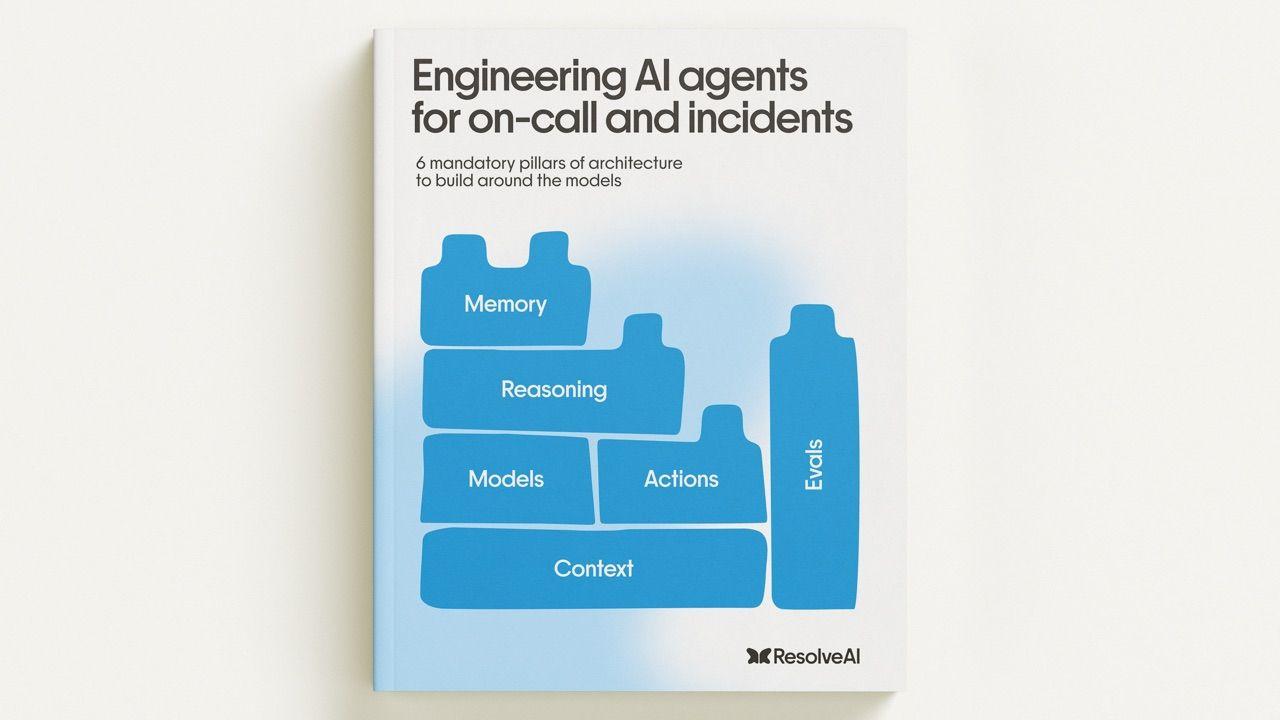
AI for prod ebook
Learn how top engineering teams use AI to run production.
See the agents that run and fix software in action
Join our engineering leads for "Behind the Build", a webinar series deep-dive into how we built agents that run software.