




Loading the page…


Shaping the future of software engineering
When your Kubernetes cluster starts misbehaving at 2 AM, you're not just debugging an application — you're excavating through layers of orchestration, networking, and infrastructure that weren't designed for human comprehension. A single failing request might trace through ingress controllers, service meshes, pod networks, persistent volumes, and node-level resource constraints. Each layer has its own logs, metrics, and failure modes, scattered across kubectl outputs, container registries, and observability dashboards.
This is the reality of container debugging: what should be a straightforward investigation becomes an archaeological dig through abstraction layers, each with its own tools and tribal knowledge.
Kubernetes was built for machines, not humans. When you run kubectl get pods and see a CrashLoopBackOff, that's just the beginning. The actual problem could be anywhere: a misconfigured ConfigMap, resource limits that seemed reasonable six months ago, network policies blocking traffic, or a dependency that's failing three hops away in your service mesh.
The debugging process becomes a manual correlation exercise across fragmented data sources. You check pod logs with kubectl logs, inspect resource usage with kubectl top, examine events with kubectl describe, and cross-reference with your APM tool, log aggregator, and infrastructure monitoring. Each command returns hundreds of lines of output designed for programmatic consumption, not human pattern recognition.
Consider a typical scenario: your application pods are restarting frequently. The pod logs show connection timeouts. The service mesh metrics indicate elevated latency. Node metrics show memory pressure. Are these symptoms related? Is memory pressure causing the timeouts, or is a failing dependency causing memory leaks? Without deep Kubernetes expertise and significant time investment, these connections remain invisible.
Docker containers and Kubernetes orchestration create a unique debugging challenge that didn't exist in traditional infrastructure. Problems manifest across multiple abstraction layers simultaneously:
Pod-level issues: Resource limits, liveness probe failures, image pull problems, volume mount issues. Each requires different kubectl commands and domain knowledge.
Node-level issues: Resource exhaustion, kernel problems, Docker daemon issues, networking configuration. These require SSH access and system administration skills that application developers often don't have.
Service-level issues: Load balancing problems, service discovery failures, ingress configuration errors. These span networking, DNS, and application architecture.
Cluster-level issues: API server problems, etcd issues, controller failures, cluster autoscaling problems. These require cluster administrator privileges and deep Kubernetes internals knowledge.
The cognitive overhead is enormous. An engineer investigating a single incident must context-switch between application logs, container orchestration, networking layers, and infrastructure metrics. Each domain has specialized tools, query languages, and mental models. The investigation becomes less about solving the problem and more about navigating the toolchain.
AI debugging agents approach Kubernetes differently than human engineers. Instead of manually correlating signals across tools, they build a real-time understanding of your cluster topology, service dependencies, and failure patterns.
When investigating a Kubernetes issue, an AI agent simultaneously:
The key advantage is parallel investigation across all these domains. While a human engineer might spend 15 minutes just gathering the relevant kubectl outputs, an AI agent has already formed hypotheses about resource constraints, networking issues, and application-level problems.
For example, when Coinbase's platform experiences container issues, their engineers no longer start with broad kubectl commands and gradually narrow down. The AI agent immediately identifies the most likely failure domain — whether it's a resource limit, networking misconfiguration, or application dependency — and pursues targeted investigation paths.
In pilot deployments across production Kubernetes environments, AI debugging agents have demonstrated measurable improvements in incident response times. The 30% reduction comes from eliminating the manual correlation phase that typically consumes the first 20-30 minutes of any Kubernetes investigation.
Traditional debugging follows a predictable pattern: gather symptoms, form hypotheses, test hypotheses sequentially. This works, but it's slow. An experienced SRE might suspect a resource constraint, spend 10 minutes confirming it through kubectl commands and metrics, then realize the real issue is a networking policy that was updated last week.
AI agents pursue multiple hypotheses in parallel. They don't just check resource constraints — they simultaneously investigate networking policies, recent configuration changes, dependency health, and infrastructure events. When evidence emerges that supports one hypothesis over others, they focus investigation efforts accordingly.
The time savings are most pronounced in complex, multi-service failures where the root cause spans multiple Kubernetes abstractions. These scenarios traditionally require multiple engineers with different expertise areas. AI agents combine that expertise in a single investigation workflow.
The difference between manual Kubernetes debugging and AI-assisted investigation isn't just speed — it's systematic coverage. Human engineers, even experienced ones, follow mental shortcuts and investigate familiar failure patterns first. This works most of the time, but creates blind spots for novel failures or complex interactions.
AI debugging changes the investigation structure:
Before: Engineer gets alert → runs kubectl commands → forms hypothesis → tests hypothesis → repeats until resolution
After: Engineer describes problem → AI agent investigates all likely domains simultaneously → presents evidence-based theories with supporting data → engineer validates and takes action
The cognitive load shifts from "what should I check next?" to "which of these evidence-based theories makes the most sense?" This is particularly valuable for engineers who aren't Kubernetes specialists but need to debug containerized applications.
Consider debugging a performance issue in a microservices architecture. The manual approach requires checking each service's logs, resource utilization, and dependencies sequentially. An AI agent maps the entire request flow, identifies bottlenecks across services simultaneously, and correlates performance degradation with recent changes or resource constraints.
Implementing AI debugging for Kubernetes doesn't require replacing your existing toolchain. The most effective approach integrates with your current kubectl workflows, observability stack, and incident response processes.
Start with your most common Kubernetes pain points. If resource-related pod failures consume significant engineering time, begin there. If networking issues between services are frequent, focus on service mesh and ingress debugging. The AI agent learns your cluster's specific patterns and failure modes over time.
The key is treating AI debugging as an investigation partner, not a replacement for Kubernetes expertise. Engineers still need to understand the solutions and implement fixes. But the path from symptom to root cause becomes systematic rather than exploratory.
For teams already using kubectl extensively, the transition is straightforward. Instead of manually running diagnostic commands and correlating outputs, you describe the problem and review the AI agent's findings. The underlying Kubernetes knowledge remains valuable — it's just applied more efficiently.
Kubernetes debugging doesn't have to feel like archaeology. AI agents can navigate container complexity systematically, pursuing multiple investigation paths simultaneously while you focus on understanding and resolving the actual problems.
See how AI debugging works with your Kubernetes environment. Request a demo to experience 30% faster incident response in your own clusters.
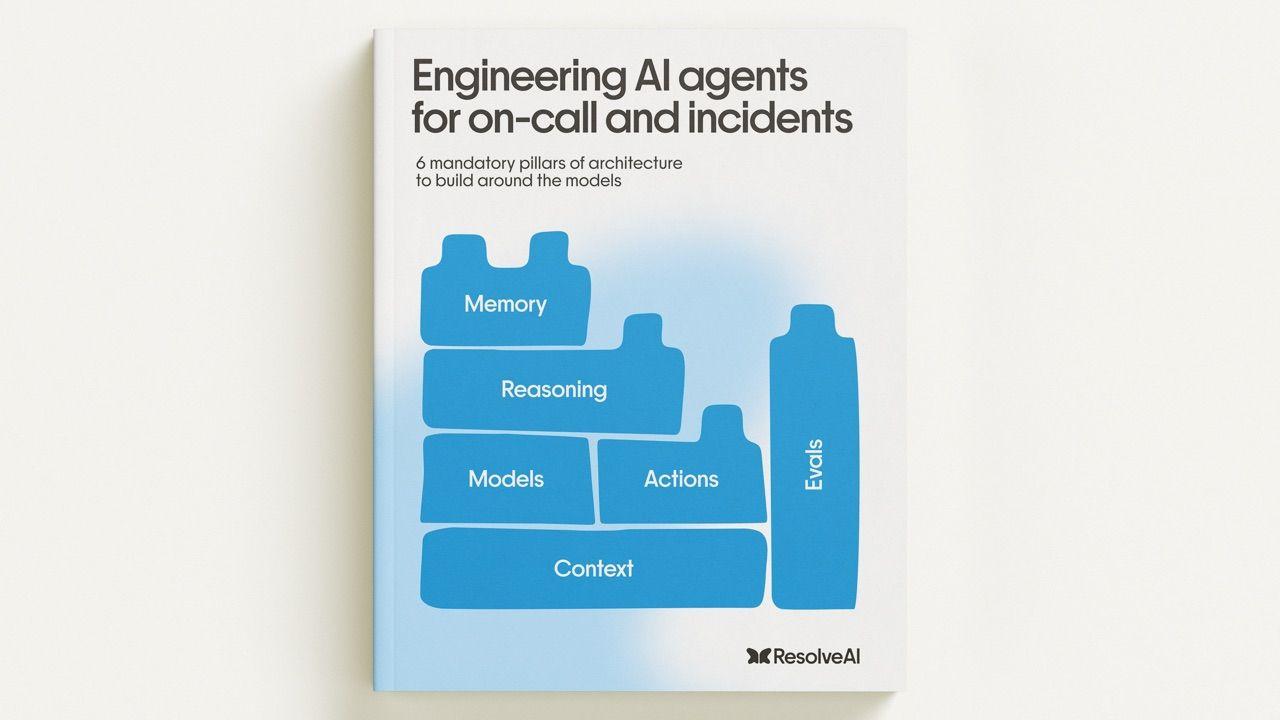
AI for prod ebook
Learn how top engineering teams use AI to run production.
See the agents that run and fix software in action
Join our engineering leads for "Behind the Build", a webinar series deep-dive into how we built agents that run software.