




Loading the page…


Shaping the future of software engineering
Kubernetes environments generate thousands of alerts daily, but most engineering teams struggle to separate genuine production threats from routine operational noise. A pod restart might signal cascading memory pressure — or it could be a normal deployment rollover. A CPU spike could indicate resource exhaustion — or expected traffic patterns. Without intelligent triage, every alert becomes a potential investigation, creating bottlenecks that slow incident response and burn out on-call engineers.
The fundamental challenge isn't the volume of alerts — it's that Kubernetes alerts lack the contextual intelligence to distinguish between symptoms and root causes. Traditional monitoring tools excel at detecting when thresholds are crossed but fall short at understanding what those threshold violations actually mean within the broader system topology.
Kubernetes generates alerts at multiple layers: container health, pod lifecycle events, node resource utilization, service mesh connectivity, and application performance metrics. Each layer operates independently, creating a cascade of related alerts when a single underlying issue manifests across the stack.
Consider a memory leak in an application container. This single problem triggers alerts for:
An experienced SRE can quickly identify the memory leak as the root cause and dismiss the downstream alerts as expected consequences. But this pattern recognition requires deep knowledge of both the application architecture and Kubernetes behavior — expertise that doesn't scale across large engineering teams.
The noise-to-signal ratio becomes particularly problematic in dynamic environments where auto-scaling, rolling deployments, and resource rebalancing generate legitimate operational events that trigger monitoring thresholds. Teams either ignore alerts (risking missed incidents) or investigate everything (burning engineering cycles on false positives).
Manual alert triage creates hidden productivity costs that extend far beyond the immediate time spent investigating false positives. When engineers can't quickly distinguish between routine operational events and genuine problems, they develop defensive behaviors that slow the entire incident response process.
On-call engineers begin treating every alert as potentially critical, leading to over-escalation and unnecessary war rooms. A pod restart that should take 30 seconds to dismiss instead becomes a 15-minute investigation involving multiple team members. These micro-investigations accumulate into hours of lost productivity weekly.
More problematic is the cognitive overhead of constant context switching. Engineers working on feature development get interrupted by alerts that turn out to be deployment artifacts or scheduled maintenance events. The mental cost of task switching often exceeds the time spent on the alert itself.
Teams respond by implementing increasingly complex alert routing and suppression rules, but these static configurations become maintenance burdens themselves. Rules that made sense during initial deployment become obsolete as applications evolve, creating new categories of missed alerts or continued false positives.
The downstream effect is alert fatigue — engineers become desensitized to notifications, increasing the likelihood that genuine incidents get overlooked or delayed. This creates a vicious cycle where teams simultaneously suffer from too many alerts and inadequate incident detection.
AI agents approach Kubernetes triage differently from traditional rule-based systems by building dynamic understanding of cluster topology and application dependencies. Rather than evaluating individual alerts against static thresholds, agents analyze patterns across the entire Kubernetes control plane to identify causal relationships.
The agent begins by constructing a real-time topology map that captures relationships between namespaces, deployments, pods, services, and nodes. This topology understanding enables the agent to trace alert propagation paths and identify which alerts represent root causes versus downstream effects.
When a pod restart occurs, the agent doesn't just check resource utilization — it examines the deployment history, recent configuration changes, resource requests versus limits, node capacity, and inter-service dependencies. It correlates the restart timing with deployment events, infrastructure changes, and traffic patterns to determine whether the restart represents normal operations or indicates an underlying problem.
For memory pressure scenarios, the agent traces resource consumption patterns across time windows, identifying whether pressure is increasing gradually (suggesting a memory leak), spiking periodically (indicating traffic-driven demand), or correlating with specific application events (pointing to inefficient code paths).
The topology awareness extends to understanding Kubernetes scheduling decisions. When pods get evicted or rescheduled, the agent evaluates whether these actions successfully resolved resource contention or whether they indicate systemic capacity issues that require human intervention.
This contextual analysis happens continuously, building institutional knowledge about normal operational patterns specific to each cluster and application. The agent learns which types of events typically resolve themselves versus those that require immediate attention.
A recent investigation at a major cryptocurrency platform demonstrates how AI agents trace issues across Kubernetes layers to identify true root causes. The initial alert indicated memory pressure on several pods across different namespaces, triggering multiple related notifications about pod evictions and service degradation.
Traditional triage would have focused on the individual pod memory utilization, potentially leading to application-level debugging or resource limit adjustments. However, the AI agent's topology analysis revealed a different pattern: the affected pods were distributed across specific nodes in a way that suggested underlying infrastructure issues rather than application problems.
The agent traced the memory pressure to a subset of worker nodes that had recently been added to the cluster. By analyzing node provisioning logs, kernel memory allocation patterns, and hardware monitoring data, it identified that these nodes had faulty memory modules causing intermittent allocation failures.
The investigation path followed this sequence:
This cross-layer investigation took approximately 12 minutes and correctly identified a hardware issue that would have been extremely difficult to diagnose through traditional alert-by-alert analysis. The platform team was able to cordone the affected nodes and replace the faulty hardware before the issue caused broader service impact.
Complex Kubernetes issues often require expertise spanning multiple domains: container orchestration, application performance, network topology, and infrastructure management. Multi-agent systems address this by deploying specialized agents that collaborate during investigations.
The Kubernetes agent focuses on cluster-specific knowledge: pod scheduling, resource allocation, service mesh configuration, and control plane behavior. It understands patterns like cascading failures during node maintenance, the impact of resource quotas on application performance, and how network policies affect inter-service communication.
The application agent brings context about service dependencies, database connections, cache utilization, and business logic that might influence resource consumption patterns. It can correlate Kubernetes events with application-specific metrics like request rates, error patterns, and downstream service health.
The infrastructure agent contributes knowledge about underlying compute, storage, and network resources. It monitors node health, disk I/O patterns, network connectivity, and hardware-level metrics that might not be visible to Kubernetes-level monitoring.
During investigations, these agents work in parallel, each pursuing hypotheses within their domain of expertise. The Kubernetes agent might explore pod placement and resource contention while the application agent examines database connection pools and the infrastructure agent checks storage performance.
As evidence emerges, agents share findings and refine their investigation paths. If the infrastructure agent identifies disk latency issues, the Kubernetes agent can focus on pods with persistent volume claims, while the application agent examines services that perform intensive I/O operations.
This collaborative approach prevents the tunnel vision that often occurs in manual investigations, where engineers focus on their area of expertise and miss cross-domain root causes.
Deploying AI agents for Kubernetes triage requires careful integration with existing monitoring infrastructure and operational workflows. The implementation should augment rather than replace existing alerting systems, providing intelligent filtering and context enrichment.
Initial setup requirements:
Agent deployment considerations: Deploy agents with appropriate RBAC permissions to read cluster state without modification capabilities. Agents should run in dedicated namespaces with resource quotas to prevent interference with application workloads.
Configure agents to ingest alerts from multiple sources while maintaining traceability back to original monitoring systems. This enables seamless integration with existing escalation procedures and maintains audit trails for compliance requirements.
Gradual rollout strategy: Begin with observation mode, where agents analyze alerts and provide recommendations without modifying existing alert routing. This allows teams to validate agent accuracy against known incident patterns before relying on automated triage decisions.
Focus initial deployment on high-volume, low-criticality alert categories where false positive reduction provides immediate value. Pod restart alerts, resource utilization warnings, and deployment-related notifications are typically good starting points.
Integration with incident response: Configure agents to enrich alerts with contextual analysis rather than suppressing them entirely. Enhanced alerts should include topology context, related events, and confidence levels for triage recommendations.
Establish feedback loops where on-call engineers can correct agent analysis, enabling continuous learning and improvement of triage accuracy over time.
Successful AI triage implementation transforms both quantitative metrics and qualitative team experiences. Traditional monitoring focuses on alert volume and response times, but AI triage success requires measuring investigative efficiency and confidence levels.
Key performance indicators:
Team experience metrics: Track on-call engineer satisfaction and alert fatigue levels through regular surveys. Engineers should report increased confidence in alert prioritization and reduced stress during incident response.
Monitor the quality of incident post-mortems. When agents provide accurate initial context, post-mortems should focus more on preventive measures and less on forensic timeline reconstruction.
Operational improvements: Measure the shift in engineering time allocation from reactive debugging to proactive system improvement. As triage becomes more efficient, teams should have more capacity for reliability engineering and preventive measures.
At organizations like Coinbase and Zscaler, AI triage agents have reduced investigation times by 70-75% while significantly decreasing the number of engineers required per incident. These improvements compound over time as agents learn organization-specific patterns and build institutional knowledge that traditionally existed only in senior engineers' experience.
Ready to eliminate alert fatigue and transform your Kubernetes operations? Resolve AI's production agents provide intelligent triage across your entire stack, combining Kubernetes expertise with application and infrastructure context to identify real issues fast. Request a demo to see how AI agents can reduce your investigation times by up to 87% while giving your engineering team the confidence to focus on what matters most.
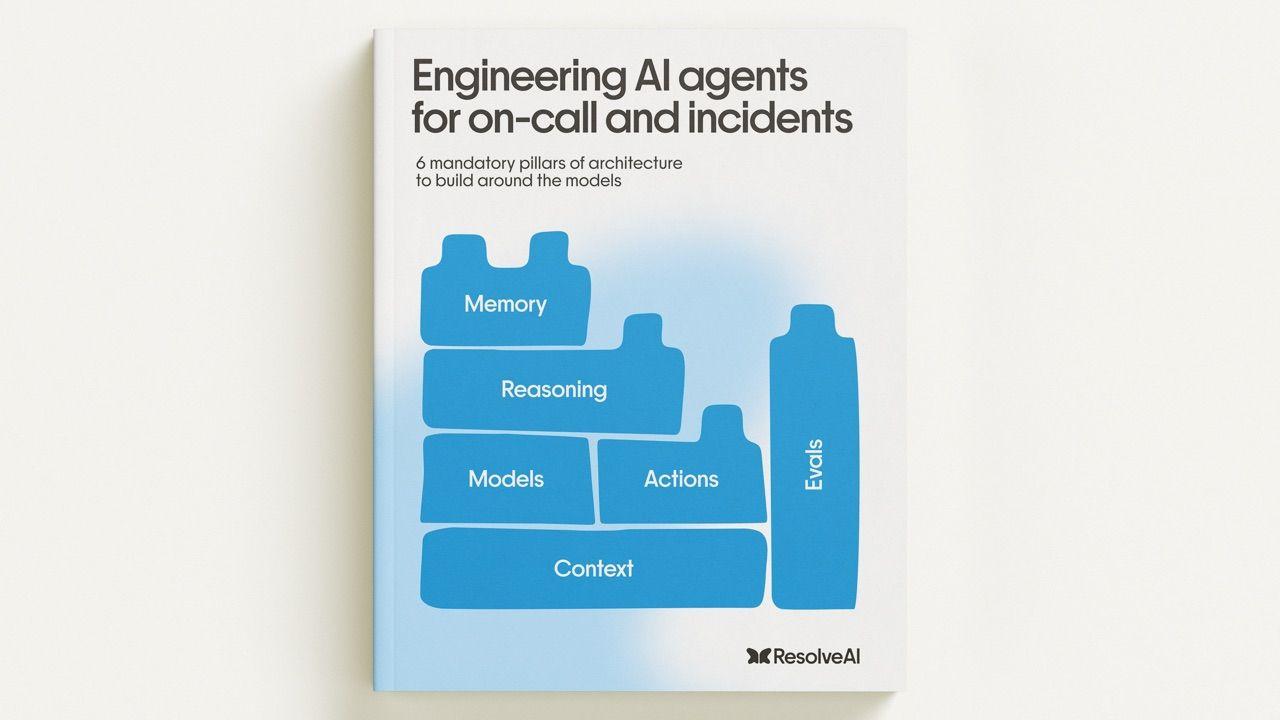
AI for prod ebook
Learn how top engineering teams use AI to run production.
See the agents that run and fix software in action
Join our engineering leads for "Behind the Build", a webinar series deep-dive into how we built agents that run software.